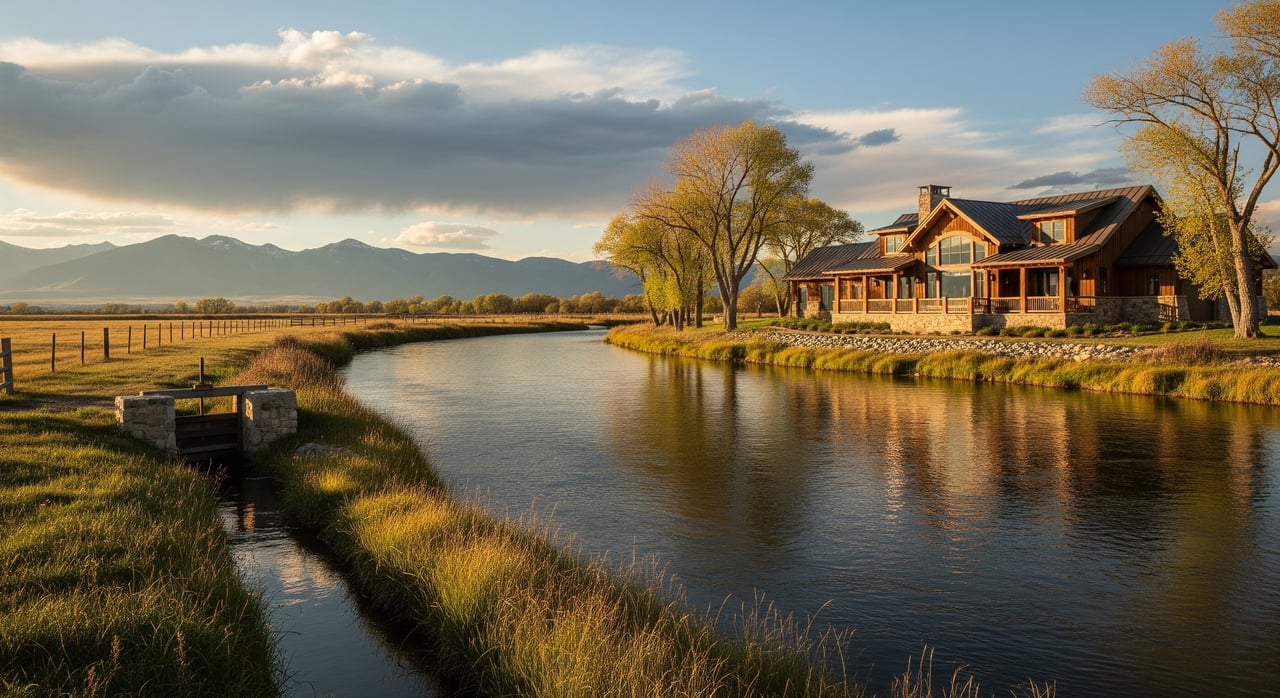
You can fall in love with the Madison River at first cast, but owning property near it comes with one key question: what water can you legally use, and when? If you plan to irrigate a pasture, fill a pond, or even rely on a well, water rights in Montana will shape what is possible. This guide explains the basics, highlights Madison Valley specifics, and gives you a practical checklist to protect your plans. Let’s dive in.
Water rights basics
Montana follows prior appropriation, which means “first in time, first in right.” Older, or senior, rights get water before newer, or junior, rights when flows run low. In late summer, this order often decides who can keep diverting.
Beneficial use is the basis and limit of a water right. A right is defined by how the water has been used, such as irrigation, domestic, stock, municipal, or instream. Owning land by the river does not automatically give you a water right.
Water-right records come in several forms. Older uses may be recorded as claims. New appropriations require a DNRC permit, which is conditional until you submit proof of beneficial use. When proof is accepted, the DNRC issues a certificate, often referred to as an absolute right. Conditional rights can be lost if not perfected.
Every water right has key details that matter to you: the priority date, the rate and volume or acreage authorized, the season of use, the point of diversion, and the legal place of use. Instream flow rights, often held by state agencies, also exist to protect fisheries and can limit new or changed diversions during protected periods.
Surface vs. groundwater
Surface water and groundwater are linked in many parts of the Madison Valley. Pumping a well that is hydrologically connected to the river or a tributary can reduce surface flows. In that case, your well may face similar priority and permitting limits as a surface diversion.
Montana regulates new appropriations from both surface water and non‑exempt groundwater. Some small domestic wells may fit within specific rules, but you should confirm current requirements before assuming any exemption. Even small wells can affect nearby streamflows if the aquifer is connected.
In the valley’s shallow alluvial aquifers, groundwater often feeds springs and river reaches. If you are thinking of relying on a well instead of a ditch, verify the well’s legal status and the local hydrology. A site‑specific review by a qualified hydrogeologist is often the safest path.
Madison Valley must‑knows
Public stream access is part of life on the Madison. People can use the river for recreation up to the ordinary high‑water mark if they enter from public access points or public land. Owning river frontage does not give you exclusive recreation control or an automatic right to divert water.
Many irrigation systems are operated by ditch companies or mutuals. If your property has ditch shares, you will likely pay assessments and follow company agreements. Delivery points, measuring devices, and maintenance responsibilities are often set by the company, not by the individual landowner.
Reservoirs, headgates, and seasonal flows come with the territory. Some rights rely on stored water or on upstream releases. The season of use and your priority date will drive how much water you actually see at your headgate, especially late in the summer.
Instream flow claims on parts of the Madison and its tributaries protect fisheries. These claims can limit new diversions or changes that would reduce flows during protected periods. Always confirm whether instream protections cover the reach near your property.
Water rights can be severed from the land. A prior owner may have sold or transferred rights separately, so do not assume the deed includes them. Seasonal low flows in late summer and early fall are when seniority and hydrologic connection issues most often affect actual availability.
Buyer due diligence checklist
- Search DNRC records
- Use the DNRC database to find water rights tied to the parcel’s legal description. Confirm priority date, use type, rate or volume, season, point of diversion, and place of use.
- Obtain a formal DNRC water-right abstract. Many closings require it.
- Confirm on‑site infrastructure
- Identify headgates, ditches or pipes, measuring devices, pumps, wells, and any ditch‑company shares. Verify what conveys with the deed.
- Review deed and title
- Check recorded easements, ditch agreements, and covenants that affect water. Ask the title company about water‑right endorsements or exclusions. Consider specialist review or coverage if available.
- Check county and local records
- Visit the Madison County Clerk and Recorder for transfers, easements, or assigned shares. Contact local ditch companies about assessments and membership responsibilities.
- Inspect the property
- Confirm actual diversion points match paperwork. Note condition and ownership of structures, and whether flows are measured or metered.
- Assess hydrology and legal needs
- If you plan to rely on a new or existing well, consider a hydrologic review to evaluate connection to the river and likely permitted yield.
- If you need a change of use or transfer, consult a water attorney experienced with DNRC procedures.
- Check instream protections
- Determine whether instream flow rights affect your reach and which periods or flow thresholds could limit diversions.
- Verify permit and certificate status
- Confirm whether rights are conditional or absolute and whether proof of beneficial use has been accepted.
- Review historical flows
- Look at USGS and DNRC flow data for seasonal patterns and past low‑flow conditions near your area of interest.
- Understand costs
- Identify water‑district assessments, irrigation fees, ditch‑company dues, or special taxes tied to water infrastructure.
- Confirm chain of title
- Make sure prior transfers of water rights or shares were properly recorded and the chain is clear.
Who to contact
- Montana Department of Natural Resources & Conservation (DNRC) Water Rights Division for permits, abstracts, and database records.
- Montana Fish, Wildlife & Parks for stream access and instream flow program context.
- U.S. Geological Survey for stream gage data and technical studies of stream‑aquifer interaction.
- Madison County Clerk & Recorder and the local conservation district for recorded documents and coordination.
- Local ditch companies or mutuals that operate near your property.
- Water‑rights attorneys and hydrogeologists with southwest Montana experience.
Common pitfalls
- Trusting seller claims without pulling DNRC abstracts and recorded documents.
- Assuming title insurance covers water rights. Standard policies often exclude them.
- Believing that a headgate or ditch on the ground equals a perfected right.
- Underestimating hydrologic complexity. The mix of wells, ditches, reservoirs, and fisheries protections in the Madison Valley makes site‑specific review essential.
Plan your water strategy
Treat water rights as a core part of your purchase, not an afterthought. Start early with DNRC records, confirm what actually conveys, and match your plans to the priority date, season, and delivery method on paper. If you expect to rely on a well or to change a use, bring in a hydrogeologist and a water attorney to map the path.
If you want a local advocate who understands river, ranch, and resort properties and will coordinate the right experts, work with a buyer‑focused agent. As a CEBA‑certified representative with deep Madison and Gallatin Valley experience, Tyler Garrison can help you align lifestyle goals with sound water‑rights due diligence. Schedule a free consultation and move forward with confidence.
FAQs
Do riverfront owners near Ennis automatically get to divert water?
- No. In Montana, water rights are separate from land. You need a recorded right to divert legally.
How do priority dates affect irrigation in Madison Valley?
- Under prior appropriation, senior rights are served first. In drought, junior rights may be curtailed.
Can my well near the Madison River be limited by surface‑water rules?
- Yes. If your well is hydrologically connected to the river, it may face similar priority and permitting limits.
What should I know about public fishing access by my property?
- The public can use the river up to the ordinary high‑water mark if they enter from a public access point or public land. Upland areas and private structures remain private.
Can water rights be sold separately from a Madison Valley parcel?
- Yes, water rights can be transferred or changed with DNRC approval, and they can be severed from the land if properly recorded.